Northern Shoveler
Spatula clypeata
Drawn from a named source but not independently confirmed. Double-check before relying on it.
Identification/plumage/feeding facts directly confirmed against Cornell's All About Birds Northern Shoveler identification page. No Virginia-specific sub-limit found for this species in DWR's current duck season materials — noted honestly rather than assumed. Added in the Regional Species Completeness, Phase 2 pass, promoted from the framework's own pre-existing draft entry.
Legal status: A legal migratory game bird in Virginia during the open duck season, under the general duck bag limit — no shoveler-specific sub-limit was found in this project's DWR research for the current season, but verify directly before hunting.
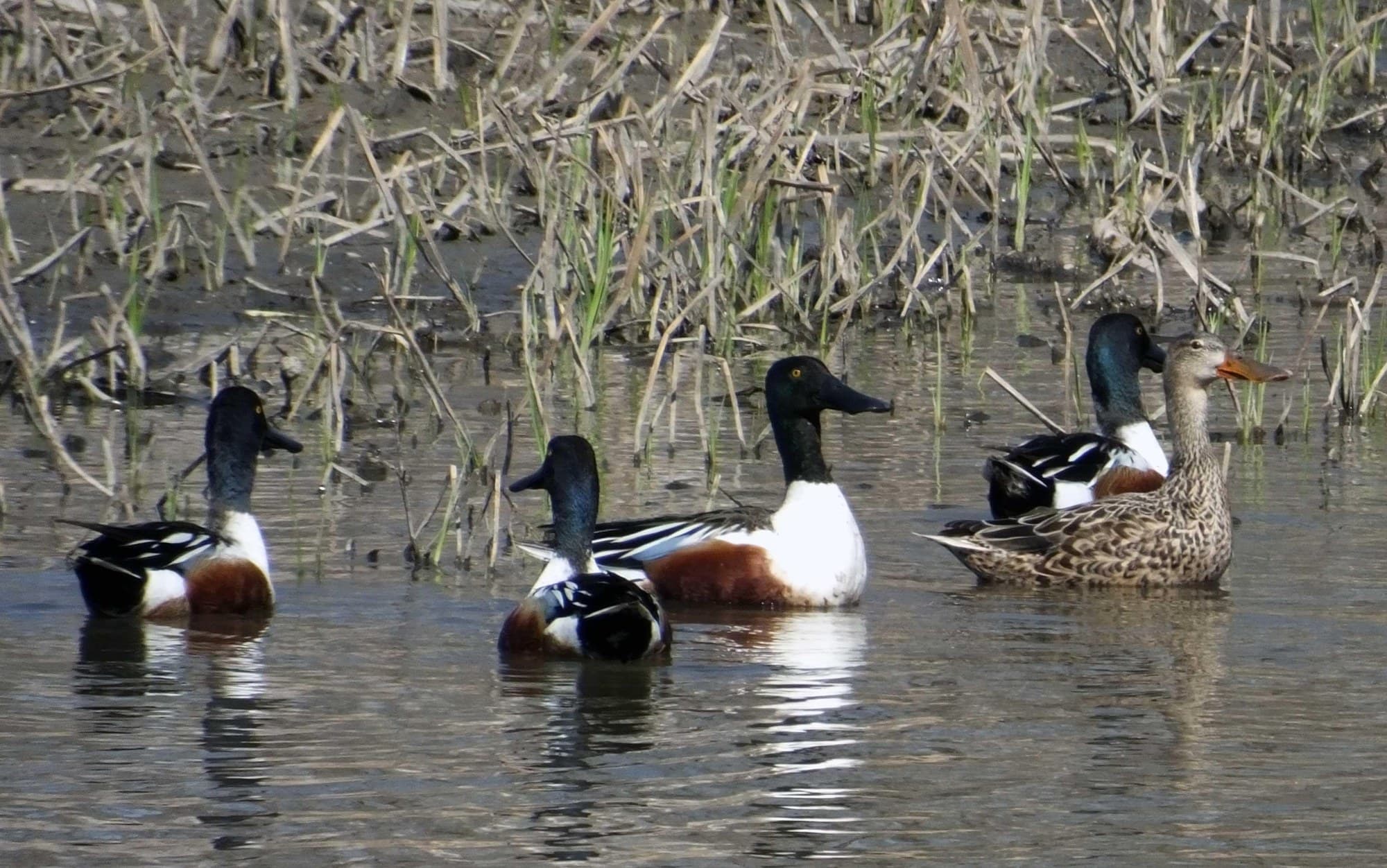
Perhaps the most outwardly distinctive dabbling duck in North America, thanks to its oversized, spoon-shaped bill — unmistakable at any range once seen well.
Field marks
- Large, spoon-shaped ('spatulate') bill roughly 2.5 inches long — the single defining field mark of the species, in both sexes.
- The bill's edges carry about 110 fine comb-like projections (lamellae) that filter tiny crustaceans and seeds from the water — a feeding adaptation, not decoration.
- In flight, both sexes show a powdery-blue shoulder patch and green secondaries.
Male, female, and seasonal plumage
- Male
- Bright white chest, rusty-red sides, and an iridescent green head, with the oversized black bill.
- Female
- Mottled brown overall, with a large orange (not black) bill — the bill size and shape stay diagnostic even without the male's color pattern.
- Habitat
- Shallow marshes, impoundments, and mudflats — favors shallower water than many other dabblers, where its filter-feeding bill is most effective.
- Feeding behavior
- Swims with its bill skimming the water's surface, filtering tiny crustaceans, seeds, and aquatic invertebrates through its comb-like bill lamellae — a distinctly different feeding method from the tip-up dabbling most other ducks use.
- Flight profile
- Direct flight; the oversized bill is often visible even in flight, giving a distinctive front-heavy silhouette.
Migration & seasonal context
A regular Atlantic Flyway winter visitor to Hampton Roads-area marshes and refuge impoundments.
This page is educational and does not certify that any specific bird may be legally taken at any specific time or place. Always confirm the current season, bag limit, and permit requirements at Licensing & Regulations →