Common Goldeneye
Bucephala clangula
Drawn from a named source but not independently confirmed. Double-check before relying on it.
Identification/habitat facts drawn from the Chesapeake Bay Program's own field guide, Cornell's All About Birds, and Ducks Unlimited via live search synthesis. `foodUseStatus` set to eat-with-caution for the same invertebrate-diet-diving-duck reasoning as bufflehead/ruddy duck. Directly relevant to Ragged Island WMA, whose own DWR page names goldeneyes among the species using that area.
Legal status: A legal migratory game bird in Virginia during the open duck season, under the general duck bag limit — verify current sub-limits, if any, directly with DWR before hunting.
A bold black-and-white diving duck nicknamed 'whistler' for the distinctive whistling sound its wings make in flight — a real, audible field mark before the bird is even seen clearly.
Field marks
- Golden-yellow eyes in both sexes.
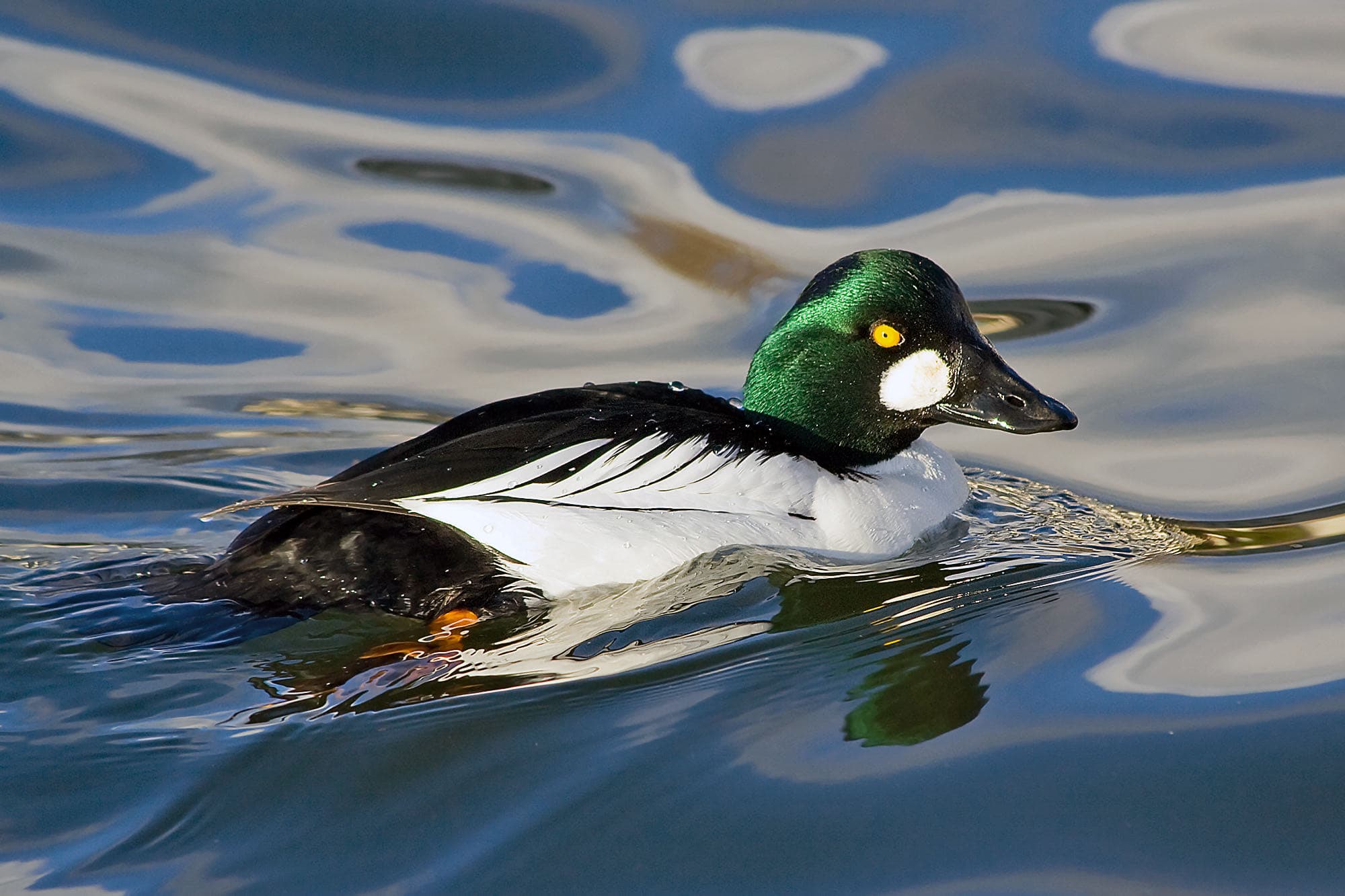
- A round white spot near the base of the bill on males, set against an otherwise dark, glossy head.
- Rapid wingbeats produce an audible whistling sound — genuinely useful for identification in low light or at distance.
Male, female, and seasonal plumage
- Male
- Mostly black-and-white — a black head (with green gloss in good light) and back, white sides making the body appear mostly white, and the round white face spot.
- Female
- Brown head with gray back and wings, lacking the male's white face spot.
- Habitat
- Open water of the Chesapeake Bay and its larger rivers, favoring areas roughly 5 to 20 feet deep, from late autumn through spring.
- Feeding behavior
- Dives in fairly shallow water (up to about 20 feet) for aquatic invertebrates, often foraging in flocks that dive together; can remain submerged nearly a minute.
Migration & seasonal context
A winter visitor to the open waters of the Chesapeake Bay and its tributary rivers, present from late autumn through spring.
This page is educational and does not certify that any specific bird may be legally taken at any specific time or place. Always confirm the current season, bag limit, and permit requirements at Licensing & Regulations →