Common Eider
Somateria mollissima
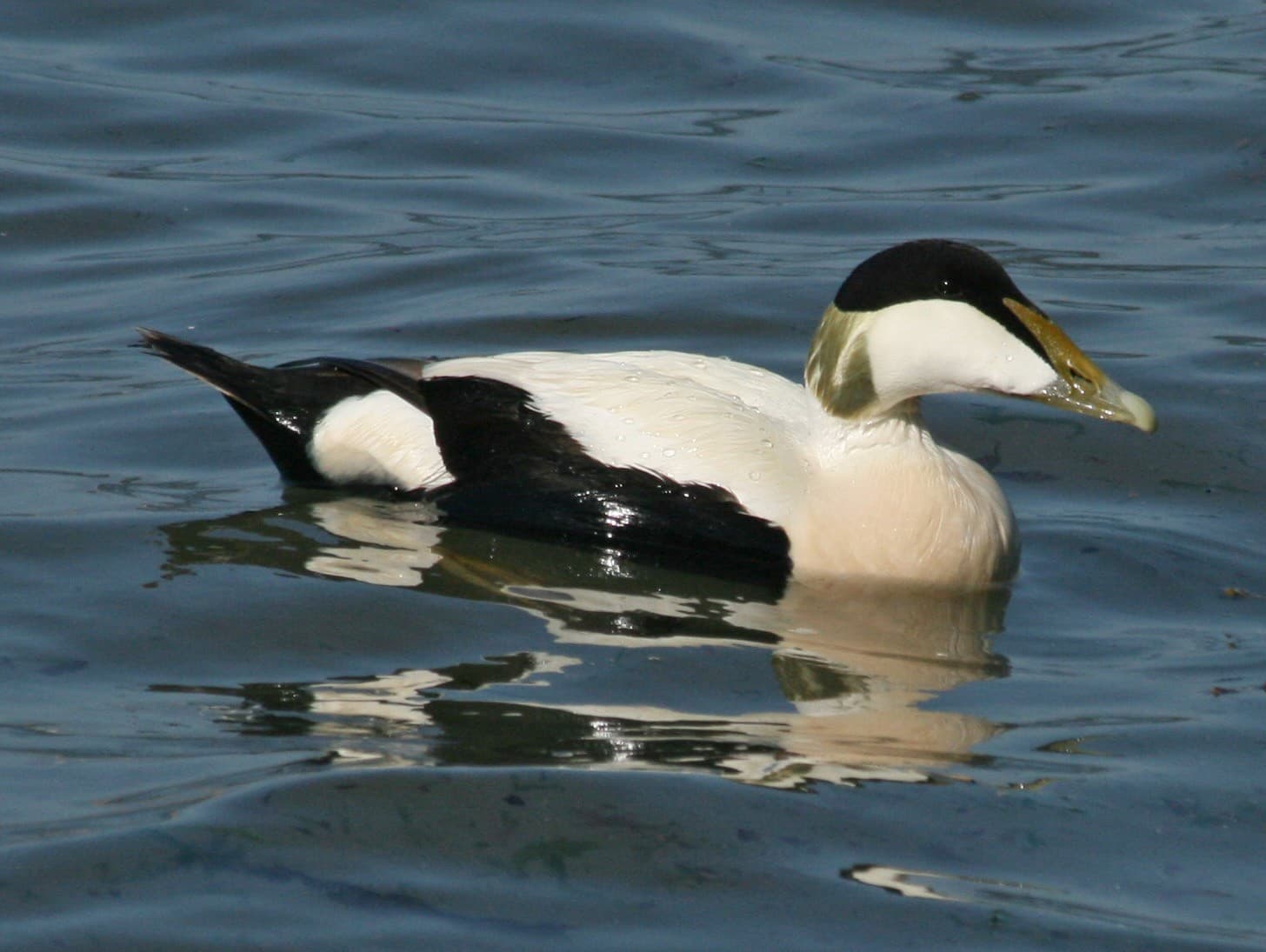
Part of this record is confirmed against an official source; other parts are not. See the notes below for exactly which.
Male/female identification features are directly confirmed against Ducks Unlimited's own waterfowl-ID page. The combined sea-duck sub-limit (4/day, max 3 eiders with only 1 hen) is the same fact already directly DWR-confirmed on this project's long-tailed-duck entry, reused here since it's one shared regulation covering both species. Virginia-specific occurrence (rare-but-regular winter visitor, CBBT as a reliable spot, a real recent 'solid winter' at Virginia Beach) is directly confirmed via regional birding-journal coverage (Beach Birding), a real, specific, dated source rather than a bare range claim.
Legal status: A legal migratory game bird, hunted during Virginia's regular duck season under the same combined sea-duck sub-limit as scoters and long-tailed duck — DWR's own current-season figure: 4 total sea ducks per day, no more than 3 eiders (only 1 of which may be a hen) within that total (see the ducks-2026-2027 HuntingSeason record). Most of the actual US common eider harvest occurs much further north (Maine, Massachusetts, Rhode Island) — a Virginia eider is a real but genuinely uncommon encounter, not a routine one.
North America's largest sea duck — a rare but regular winter visitor to coastal Virginia, with the Chesapeake Bay Bridge-Tunnel among the more reliable Virginia spots to find one and real recent Virginia Beach records.
Field marks
- Male: black crown extending below the eye, pale green on the nape, white cheek/neck/breast/back, black belly and rump, grayish-yellow bill with a pale-yellow tip.
- Female: brown overall with black barring, a buffy eye ring and eye line, dark bill; in flight shows brown wings with narrow white margins bordering a purplish-brown speculum.
- Distinctly large, heavy-bodied sea duck compared to scoters and long-tailed duck.
- Habitat
- Offshore and nearshore ocean waters and inlets — the Chesapeake Bay Bridge-Tunnel is one of the more reliable Virginia locations to find one.
Migration & seasonal context
A rare but regular winter visitor to coastal Virginia, documented repeatedly in Virginia Beach records — described by regional birding sources as having had 'a solid winter season' there in recent years after a run of poor winters for the species regionally.
This page is educational and does not certify that any specific bird may be legally taken at any specific time or place. Always confirm the current season, bag limit, and permit requirements at Licensing & Regulations →