Mole Crab (Sand Flea)
Emerita talpoida
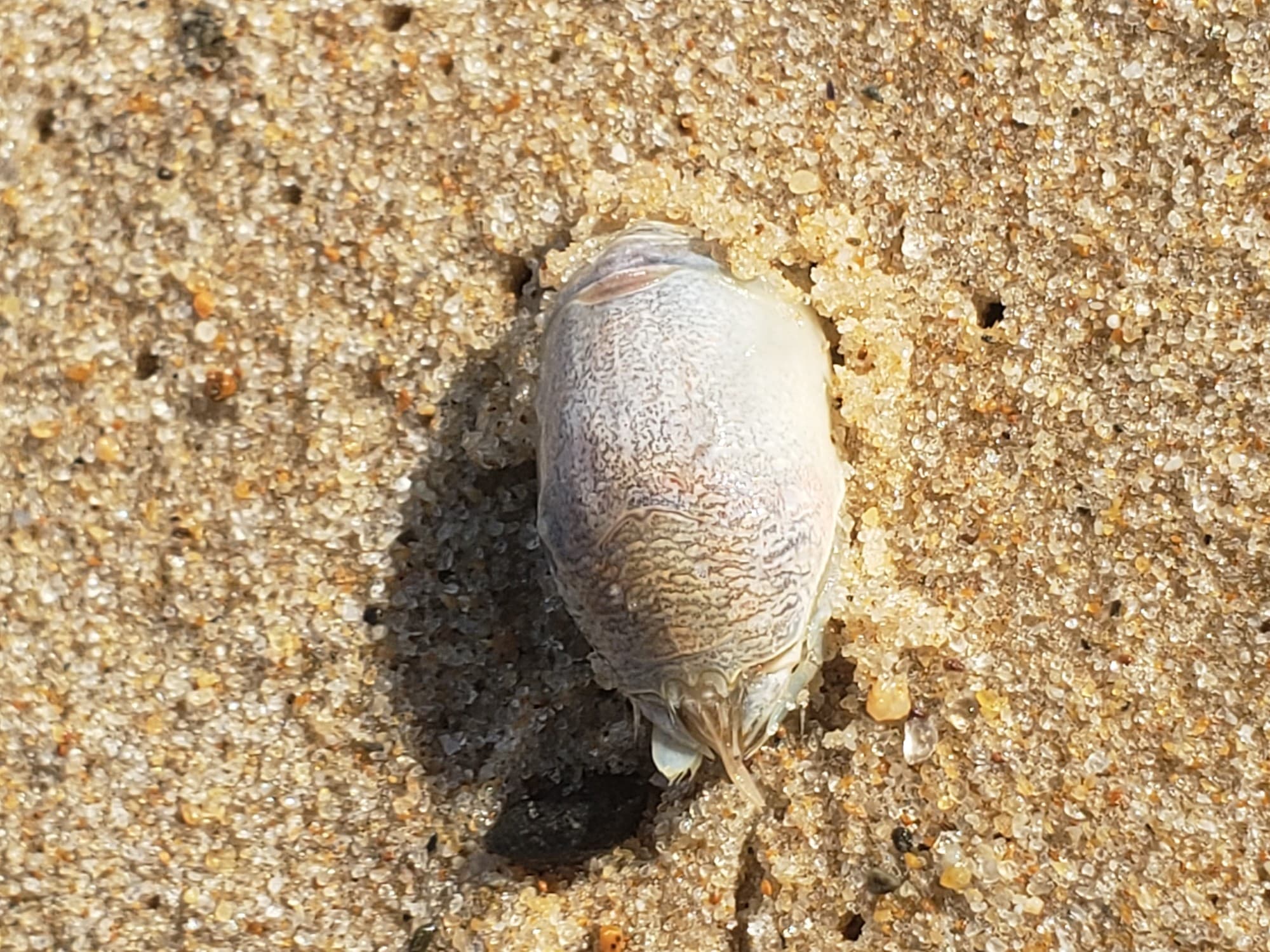
Drawn from a named source but not independently confirmed. Double-check before relying on it.
Identification via live search synthesis across multiple independent sources. Bait use directly corroborates this project's own fishing bait.ts entry (sand-fleas) — cross-linked, not duplicated.
Legal status: Widely and legally collected by hand or small rake for use as fishing bait (a favorite for red drum, black drum, sea mullet, pompano, and sheepshead — see this project's own fishing bait guide) — not treated as a human food species in this region. Do not confuse bait-collection legality with any claim about eating them.
A small (roughly 1-inch), oval, egg-shaped crustacean with no visible claws, feathery antennae for filter-feeding, and legs adapted for rapid backward burrowing.
Identification
- Smooth, tan-to-gray oval shell with no pincers.
- Rapidly digs backward into sand as a wave recedes — the classic "disappearing" beach critter.
- Feathery antennae extended to filter plankton when a wave washes over its burrow.
- Regional occurrence
- Abundant in the wet swash zone of Hampton Roads' ocean beaches (Virginia Beach oceanfront, Sandbridge) wherever sand stays in constant motion.
- Habitat
- Burrows backward into wet sand in the surf's swash zone; an indicator of a healthy, naturally moving beach.
- Food use
- Not Typically Eaten
This page is educational and does not certify that any specific animal may be legally harvested at any specific time or place. Confirm current regulations, health-closure status, and access rights before harvesting.