Marsh Periwinkle
Littoraria irrorata
Drawn from a named source but not independently confirmed. Double-check before relying on it.
Identification/ecology via the Chesapeake Bay Program's own field guide; common periwinkle context corroborated via Wikipedia/Smithsonian NEMESIS invasive-species-database sources found via WebSearch.
Legal status: Not treated as a food species in this region — included here purely for identification and its real ecological role in salt-marsh systems, not as a harvest recommendation. A related species, the common periwinkle (Littorina littorea), also reaches the southern edge of its own range in Virginia and is technically edible (a real food species in Europe) but is rarely eaten in North America.
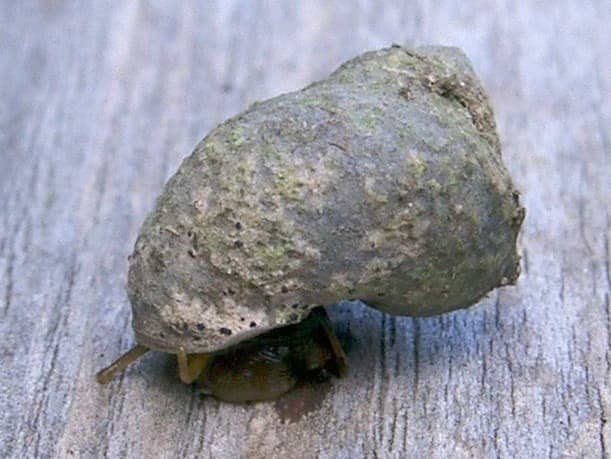
A small (about 1-inch), grayish-white-to-tan spiraled snail with reddish-brown fleck patterns, almost always found clinging to marsh grass rather than on open mud.
Identification
- Small, pointed spiral shell, grayish-white to tan with reddish-brown flecks.
- Almost always found on marsh-grass blades/stems, climbing up ahead of the rising tide rather than burrowing.
- Regional occurrence
- The dominant snail species in Hampton Roads' salt marshes — genuinely abundant wherever Spartina marsh grass grows.
- Habitat
- Salt-marsh grass blades and stems, moving up and down the plant with the tide.
- Food use
- Not Typically Eaten
Ecological role
A genuinely important marsh-ecosystem grazer, whose interaction with marsh-grass fungus has been the subject of real ecological research into salt-marsh die-off dynamics.
This page is educational and does not certify that any specific animal may be legally harvested at any specific time or place. Confirm current regulations, health-closure status, and access rights before harvesting.