Atlantic Horseshoe Crab
Limulus polyphemus
Confirmed against an official or primary source as of the date shown.
Seasonal shoreline/tidal-water harvest restriction and federal-waters landing restriction directly confirmed via WebSearch synthesis of the actual Administrative Code chapter text; commercial-permit/biomedical framework independently corroborated via ASMFC's own horseshoe crab species page.
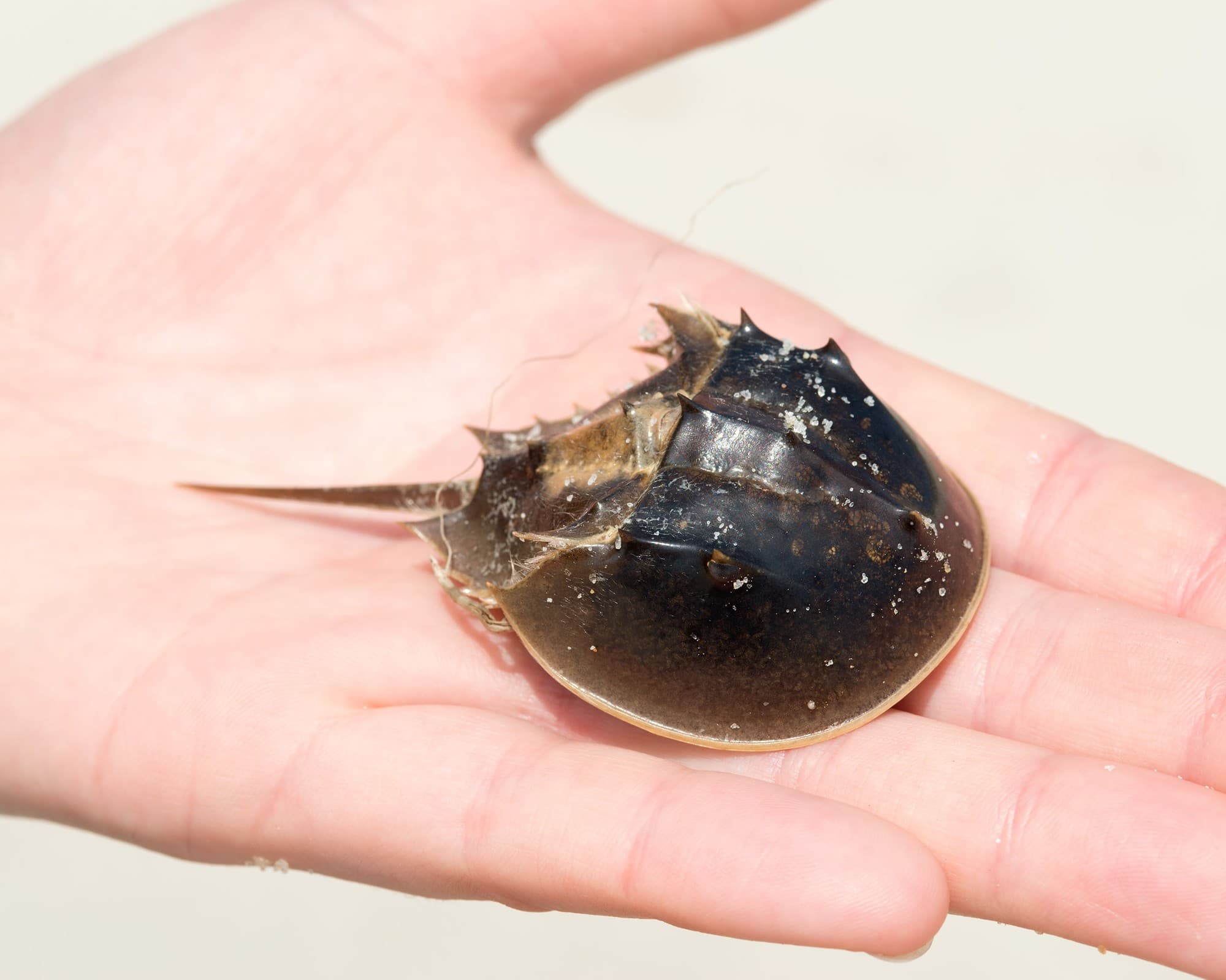
Not a true crab — an ancient, distantly related arthropod with a smooth, horseshoe-shaped shell, a long pointed tail spine (harmless, not a stinger), and multiple pairs of walking legs visible on the underside.
Identification
- Smooth, domed, horseshoe-shaped shell with no claws visible from above.
- A long, straight tail spine (telson) — used for flipping itself over, not a weapon; never picked up by the tail alone, since this can injure it.
- Often seen in mass spawning aggregations on beaches in spring.
- Regional occurrence
- Common on Hampton Roads' bay beaches and tidal flats, especially during spring spawning aggregations.
- Habitat
- Sandy intertidal beaches (spawning) and shallow sandy/muddy Bay bottom otherwise.
- Food use
- Do Not Harvest or Eat
Ecological role
Its eggs are a critical spring food source for migrating shorebirds (including red knots), and its blue, copper-based blood is used in a real, still-active biomedical industry (endotoxin testing) under special permit — a genuinely unusual dual ecological/medical importance.
This page is educational and does not certify that any specific animal may be legally harvested at any specific time or place. Confirm current regulations, health-closure status, and access rights before harvesting.