Hard Clam (Northern Quahog)
Mercenaria mercenaria
Confirmed against an official or primary source as of the date shown.
250/day limit and hand/tong method directly confirmed via a live WebFetch of VMRC's own page. The Hampton Flats size-range rule was independently confirmed via a separate Administrative Code chapter (4VAC20-561) but that chapter governs a specific named management area, not necessarily every Virginia clamming area — this real gap (no confirmed single statewide size figure found) is stated honestly rather than assumed.
Legal status: Legal to harvest recreationally by hand or ordinary tong, up to 250 clams per person per day, from open (non-condemned) areas — no license required for hand/tong personal-use harvest. This guide found a confirmed size-range rule (a 1-3/8-inch to 2-7/8-inch culling-ring pass-through range) specifically for the Hampton Flats Hard Clam Harvest Area management zone; it did not find a single confirmed statewide minimum-size figure during this research pass — verify the current size rule for your specific harvest area directly with VMRC before keeping any clam.
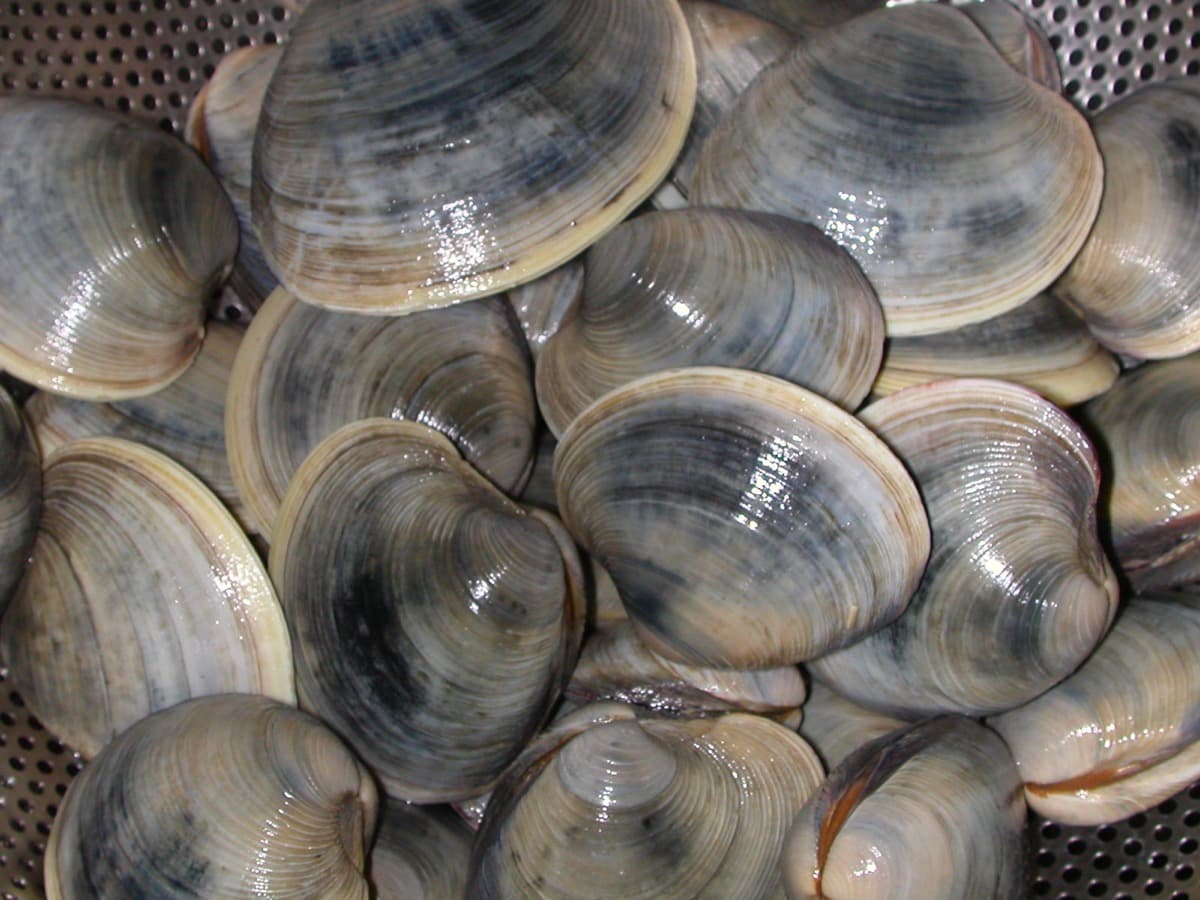
A thick, hard-shelled, roughly oval-to-heart-shaped clam with concentric growth rings — Virginia's primary recreationally harvested clam species. Market-size terms (littleneck, cherrystone, topneck, chowder) describe the same species at different sizes, not different species.
Identification
- Thick, heavy, oval-to-heart-shaped shell with visible concentric growth rings.
- Gray-white to tan exterior, often with a purplish interior margin near the hinge.
- "Littleneck" (smallest legal), "cherrystone" (medium), "topneck," and "chowder" (largest) are all market-size names for this one species, not separate clams.
- Regional occurrence
- Widespread in sandy-to-muddy bottom throughout Hampton Roads' tidal creeks, rivers, and the Bay itself.
- Habitat
- Buries in sand/mud bottom in brackish-to-salt tidal water.
- Food use
- Eat With Caution
Consumption advisory
Data not yet verified.
This site hasn't checked for a fish-consumption advisory covering this species yet. That is not the same as confirmed safe — check current official guidance before eating your catch.
This species has its own dedicated, in-depth regulation coverage on this guide — see Regulations →
This page is educational and does not certify that any specific animal may be legally harvested at any specific time or place. Confirm current regulations, health-closure status, and access rights before harvesting.