Atlantic Ghost Crab
Ocypode quadrata
Drawn from a named source but not independently confirmed. Double-check before relying on it.
Identification/ecology drawn from the Chesapeake Bay Program's own field guide via live search synthesis. No specific Virginia recreational-take regulation was found for this species during this research pass — presented honestly as status-unclear rather than assumed prohibited or assumed open.
Legal status: Not a species this guide found any confirmed general Virginia recreational take/possession regulation for, and it is not treated as a food species in Virginia. Many beach parks separately prohibit disturbing wildlife or digging; check the specific park's own rules. Included here purely for identification and beach-ecosystem education — this guide is not encouraging capture.
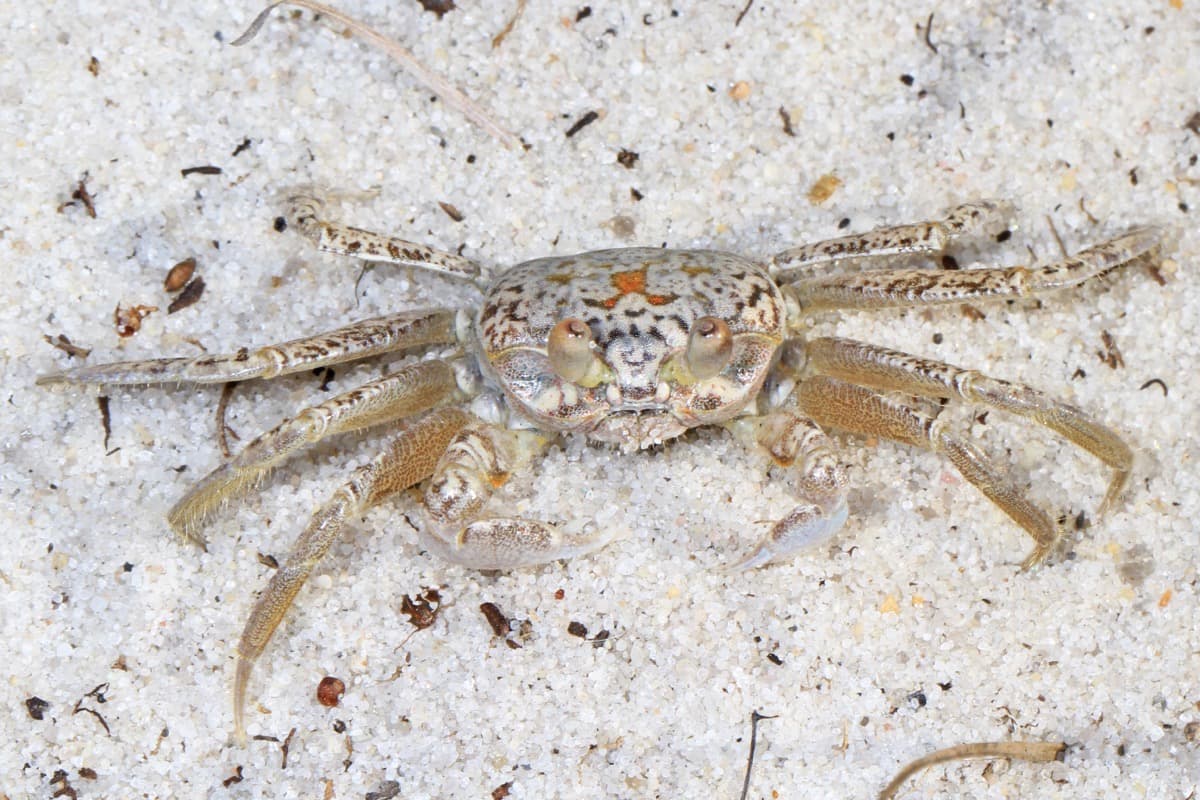
A sand-colored, boxy-shelled crab (up to about 2 inches across) with stalked eyes and one claw often noticeably larger than the other — usually seen scurrying into a burrow rather than caught.
Identification
- Pale, sand-matching coloration and a roughly square carapace.
- Long stalked eyes it can fold flat into grooves on the shell.
- Fast, sideways sprinting and near-instant burrow retreat when approached.
- Regional occurrence
- Common on Hampton Roads' ocean-facing sandy beaches (Virginia Beach's oceanfront and Sandbridge, First Landing, False Cape) — the small holes and tracks in dry upper-beach sand are usually theirs.
- Habitat
- Burrows in dry sand above the high-tide line on ocean beaches; mostly nocturnal.
- Food use
- Not Typically Eaten
Ecological role
A beach-ecosystem scavenger and a real indicator of beach health — dense, healthy ghost-crab burrow fields reflect an undisturbed, functioning dune/beach system.
This page is educational and does not certify that any specific animal may be legally harvested at any specific time or place. Confirm current regulations, health-closure status, and access rights before harvesting.