Sand Fiddler Crab
Uca pugilator
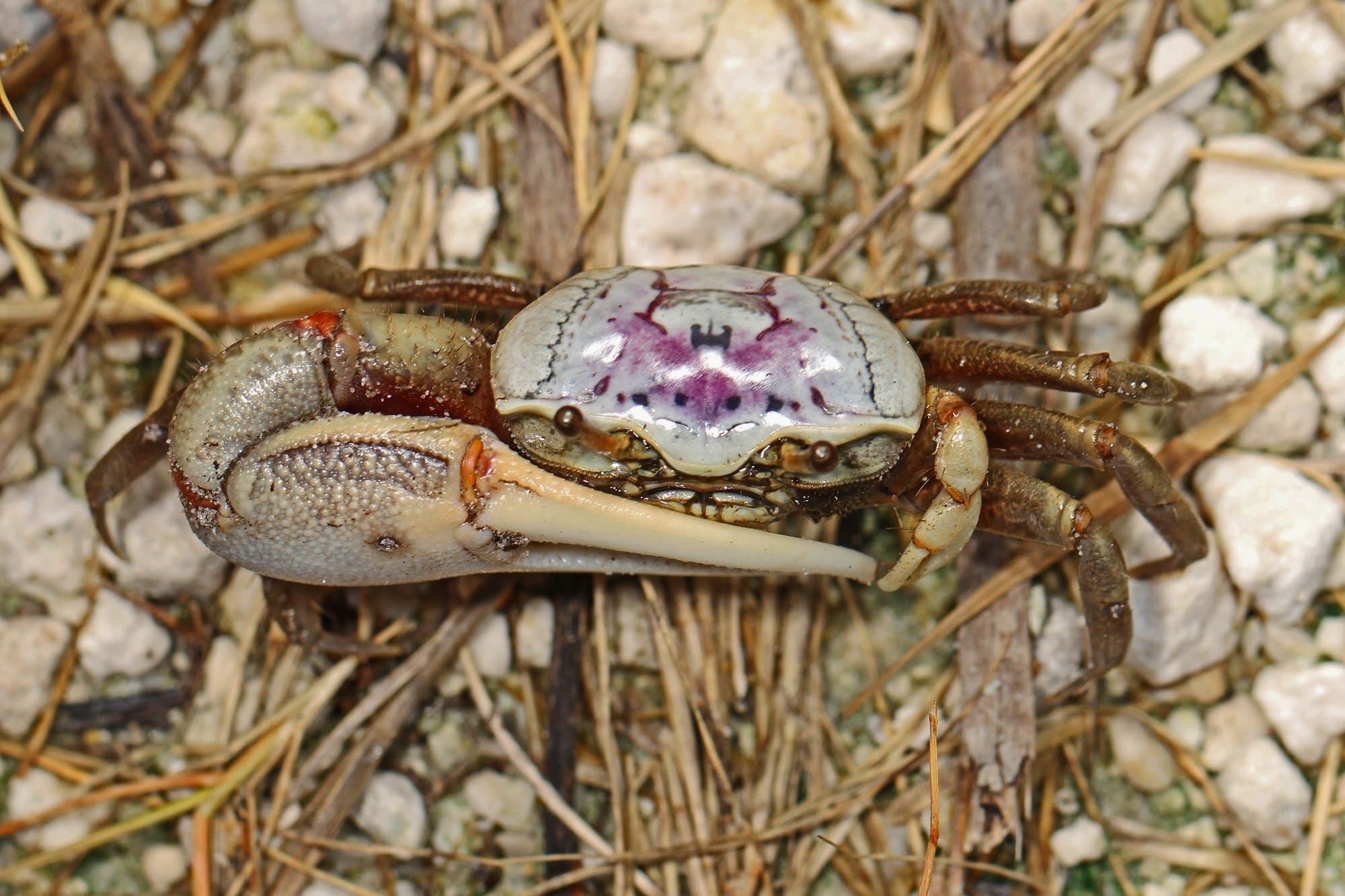
Part of this record is confirmed against an official source; other parts are not. See the notes below for exactly which.
The three-Chesapeake-Bay-species distinction (sand/marsh/red-jointed fiddler), sand-vs-mud habitat preference, and regional occurrence are directly confirmed against VIMS's own fiddler-crab research page. The male/female claw distinction is well-corroborated general knowledge (also stated on this project's own bait.ts fiddler-crab entry). No specific Virginia recreational bait-collection regulation was found naming this species — noted honestly rather than assumed unrestricted. Added in the Regional Species Completeness, Phase 2 pass.
Legal status: Widely and traditionally hand-collected for use as fishing bait (particularly for sheepshead and tautog, which specialize in picking crustaceans off hard structure — see this project's own fishing bait guide) — not treated as a human food species in this region. This project has not found a Virginia-specific recreational bait-collection regulation naming fiddler crabs directly; confirm current rules with VMRC before large-scale collection.
A small (about 1.5" across), burrowing crab; males carry one greatly enlarged claw used for signaling and combat, while females have two small, matched claws.
Identification
- Males: one dramatically enlarged claw (up to as long as the body), one small claw
- Females: two small, evenly matched claws — no enlarged claw
- Small (about 1.5" carapace width), square-ish body, eyes on raised stalks
- Lives in burrows dug into sandy beach/flat sediment, emerging to feed at low tide
- Regional occurrence
- Common on sandy salt/brackish beaches and flats in the middle and lower Chesapeake Bay, including Hampton Roads — one of three fiddler crab species found around the Bay (alongside marsh fiddler and red-jointed fiddler), distinguished by its preference for sandy rather than muddy sediment.
- Habitat
- Sandy intertidal beaches and flats — cannot survive in muddy sediment, since it feeds by sifting sand particles of a specific size.
- Food use
- Not Typically Eaten
Ecological role
An important prey species and food-web link — eaten by blue crabs, rails, egrets, herons, and raccoons.
This page is educational and does not certify that any specific animal may be legally harvested at any specific time or place. Confirm current regulations, health-closure status, and access rights before harvesting.