Eastern Oyster
Crassostrea virginica
Confirmed against an official or primary source as of the date shown.
Directly confirmed via a live WebFetch of VMRC's own recreational shellfishing regulations page. foodUseStatus is 'eat-with-caution' specifically because raw/undercooked oyster consumption carries a real Vibrio risk this guide's own Health & Safety section (Phase 35F) addresses in depth — not because the species itself is unsafe when properly handled and cooked.
Legal status: Legal to harvest recreationally by hand or ordinary tong, up to one bushel per person per day, only during the open season and only from open (non-condemned, non-leased) public rocks — this guide's own dedicated Oyster & Clam Guide covers the full public-ground/lease/condemnation/sanctuary distinction in depth. Never assume a visible oyster reef is open, public, and currently approved for harvest without checking directly.
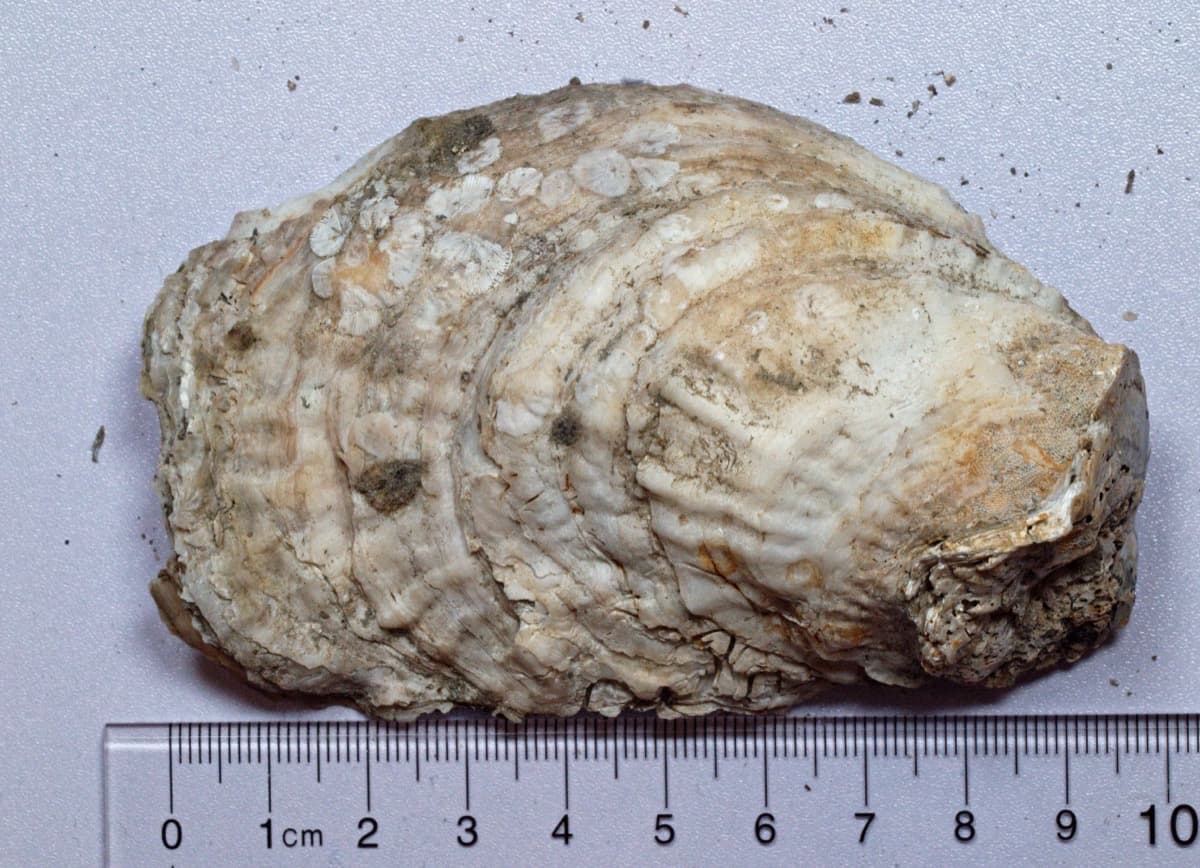
A rough, irregularly shaped bivalve with two unequal shell halves (one cupped, one flat), typically gray-white to purplish, cemented to hard substrate or other oysters.
Identification
- Irregular, elongated shell shape, unlike a clam's smooth oval.
- Grows attached (cemented) to hard substrate or other oyster shells, forming reef structure.
- Interior shell is smooth and pearly-white to purplish.
- Regional occurrence
- The Chesapeake Bay's other iconic harvestable species, present on natural reefs, restoration reefs, and aquaculture operations throughout Hampton Roads' rivers and the Bay itself — the Lynnhaven River is a nationally known example (see this guide's own Culture section, Phase 35M).
- Habitat
- Hard-bottom reefs (natural or restored) and shell/rock substrate in brackish-to-salt tidal water; a true reef-building, habitat-forming species, not just a harvest target.
- Food use
- Eat With Caution
Ecological role
A true reef-building keystone species — a single adult oyster filters large volumes of Bay water daily, and oyster reefs provide structural habitat for many other species. See this guide's own dedicated Oyster & Clam Guide (Phase 35D) for the full reef-ecology picture.
Consumption advisory
Data not yet verified.
This site hasn't checked for a fish-consumption advisory covering this species yet. That is not the same as confirmed safe — check current official guidance before eating your catch.
This species has its own dedicated, in-depth regulation coverage on this guide — see Regulations →
This page is educational and does not certify that any specific animal may be legally harvested at any specific time or place. Confirm current regulations, health-closure status, and access rights before harvesting.