Bay Scallop
Argopecten irradians
Drawn from a named source but not independently confirmed. Double-check before relying on it.
Restoration history and current-status framing drawn from WHRO's own reporting (a Hampton Roads public broadcasting outlet) found via WebSearch, referencing VIMS survey data directly. No VMRC regulation text was independently fetched confirming the closure, since no current recreational season exists to regulate — the closure is the default absence of an open season, not a specific prohibition regulation this project could cite chapter-and-verse.
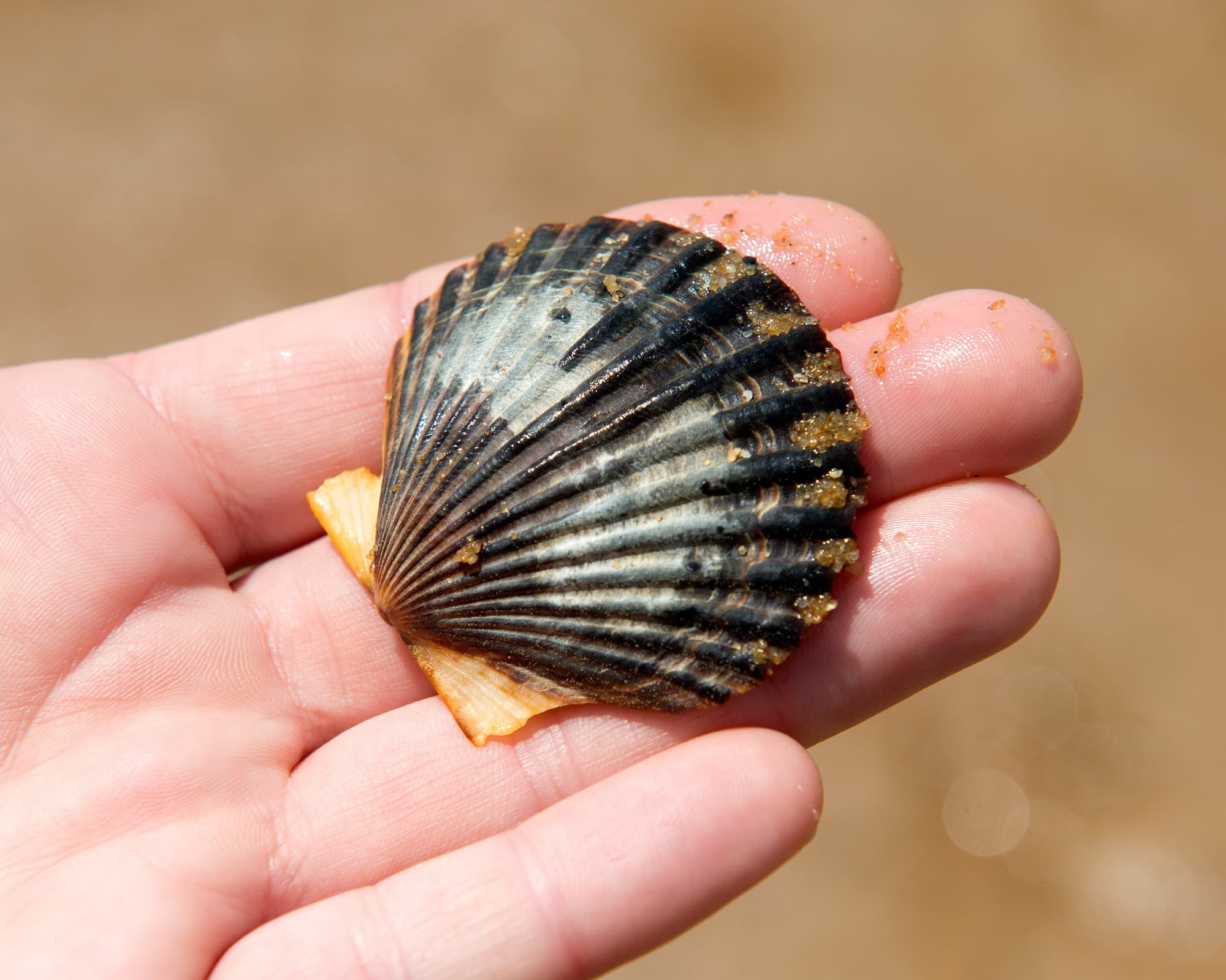
A small, fan-shaped, ribbed scallop shell with a row of small blue eyes visible along the mantle edge in the living animal — genuinely distinct in both look and story from the much larger Atlantic sea scallop.
Identification
- Small (2-3 inch), fan-shaped, ribbed shell.
- Living animal has a visible row of small blue eyes along the mantle edge.
- Found in seagrass beds, not open sandy/muddy bottom.
- Regional occurrence
- A real conservation-recovery story, not a current recreational opportunity: Virginia's bay scallop fishery collapsed after only a few productive years around 1930 and the species was effectively extirpated from Virginia's seaside Eastern Shore for decades. Restoration efforts over roughly the past 15 years have brought a real, measured population rebound, with VIMS survey density approaching (but as of this research, not yet confirmed to have reached) the benchmark Florida uses to justify reopening its own recreational fishery.
- Habitat
- Seagrass beds in shallow, clear coastal lagoons — historically the Eastern Shore's seaside bays specifically.
- Food use
- Not Typically Eaten
Ecological role
A real, actively tracked restoration-success indicator species for Virginia's seaside seagrass ecosystem — a rare good-news story in Bay/coastal restoration this guide's own Culture section can point to honestly.
Similar species — check before you keep one
Identification alone never establishes that an animal may legally be kept. Confirm species before harvesting.
This page is educational and does not certify that any specific animal may be legally harvested at any specific time or place. Confirm current regulations, health-closure status, and access rights before harvesting.